
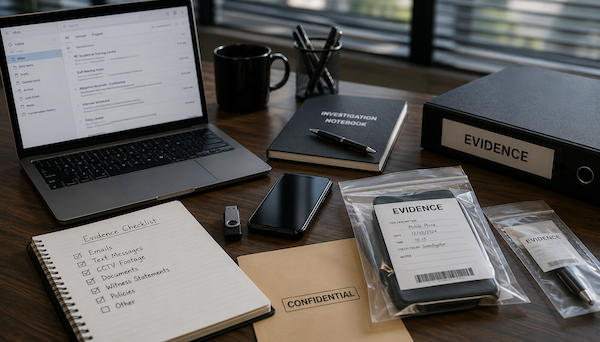
The success of any Reportable Conduct investigation often depends on the quality of the evidence available.
Unfortunately, organisations sometimes focus on interviewing witnesses before taking steps to preserve critical evidence. By the time the investigation formally begins, CCTV footage has been overwritten, emails have been deleted or witnesses have unintentionally influenced one another through informal discussions.
Evidence preservation is one of the first and most important steps in any professional investigation.
Acting promptly helps ensure investigators can establish the facts using reliable, contemporaneous evidence rather than relying solely on recollections months later.
Why Evidence Preservation Matters
Evidence forms the foundation of every investigation.
Without reliable evidence, investigators may struggle to determine what occurred, assess competing accounts or make findings that are capable of withstanding external scrutiny.
Preserving evidence also protects everyone involved by ensuring that decisions are based on objective information rather than assumptions or speculation.
Evidence Is More Than Documents
Many people assume evidence consists only of written complaints or witness statements.
In reality, evidence may include a wide range of information, including:
- CCTV footage;
- body-worn camera footage;
- photographs;
- emails;
- text messages;
- Microsoft Teams or Slack conversations;
- social media communications;
- incident reports;
- personnel records;
- visitor sign-in registers;
- access control records;
- GPS or vehicle tracking data;
- telephone records;
- medical or welfare records (where lawfully available); and
- physical exhibits.
Every investigation will require consideration of what evidence may exist and how it can be preserved.
Digital Evidence Can Disappear Quickly
Many organisations underestimate how quickly electronic evidence can be lost.
For example:
- CCTV systems often overwrite footage after a set period.
- Messaging applications may automatically delete conversations.
- Mobile phones can be replaced or reset.
- Emails may be archived or deleted.
- Cloud storage may be altered by multiple users.
For this reason, preserving digital evidence should be one of the earliest actions taken after an allegation is received.
Avoid Altering the Evidence
Once evidence has been identified, it should be preserved in its original form wherever possible.
Organisations should avoid:
- editing documents;
- annotating original records;
- cropping photographs;
- modifying electronic files;
- deleting duplicate material; or
- attempting to “clean up” records before investigators review them.
Maintaining the integrity of evidence helps ensure it remains reliable and credible throughout the investigation.
Protecting Witness Evidence
Evidence preservation also applies to people.
Witnesses should not be encouraged to discuss the allegation among themselves before formal interviews are conducted.
Allowing witnesses to compare accounts may unintentionally influence their recollection of events and reduce the reliability of their evidence.
Professional investigators generally interview witnesses individually using structured interview techniques designed to obtain their independent recollection.
Keep Accurate Investigation Records
From the moment an allegation is received, organisations should maintain accurate records of the investigative process.
This may include:
- when the allegation was received;
- who was notified;
- actions taken to protect children;
- evidence preserved;
- decisions made;
- reasons for those decisions; and
- investigation milestones.
Good record keeping assists investigators and demonstrates that the organisation responded appropriately and responsibly.
Independent Investigators Understand Evidence Management
Professional investigators are trained to identify, secure and assess evidence from a wide variety of sources.
An independent investigator will typically:
- identify relevant evidence early;
- preserve documentary and electronic records;
- interview witnesses using recognised investigative techniques;
- assess the reliability of evidence;
- maintain appropriate evidence registers; and
- prepare findings based on the totality of the available evidence.
This structured approach provides organisations with confidence that important information has not been overlooked.
Strong Evidence Leads to Better Decisions
The quality of an investigation is directly linked to the quality of the evidence available.
When organisations act quickly to preserve evidence, maintain confidentiality and engage experienced investigators where appropriate, they place themselves in the strongest possible position to make informed, fair and defensible decisions.
Evidence cannot always prevent disputes, but it significantly improves the ability of investigators to establish the facts.
How Regional Queensland Investigations Can Assist
Regional Queensland Investigations conducts independent Reportable Conduct investigations throughout Queensland.
Our investigators are experienced in identifying, preserving and assessing documentary, electronic and witness evidence while ensuring investigations are conducted professionally and in accordance with the principles of procedural fairness.
We assist schools, childcare providers, disability service providers, sporting organisations, government agencies and community organisations by delivering impartial investigations supported by comprehensive evidence analysis and executive-ready investigation reports.
Contact Regional Queensland Investigations
If your organisation requires an independent Reportable Conduct investigation anywhere in Queensland, Regional Queensland Investigations can assist.
Regional Queensland Investigations
📞 1300 870 923

Jason King is the Director of Regional Queensland Investigations Pty Ltd. He has a background in law enforcement, compliance, workplace investigations and corporate investigations, assisting businesses and organisations across regional Queensland and the Northern Territory.