01
What is Queensland’s Reportable Conduct Scheme?
Understand the purpose of the Scheme, the organisations it applies to and the responsibilities it creates.
Read Article
Practical guidance for Queensland organisations responsible for protecting children, responding to allegations and conducting fair, independent and defensible investigations.
This Resource Centre has been developed for Heads of Entity, executives, principals, directors, boards, governance professionals and organisations working with children throughout Queensland.
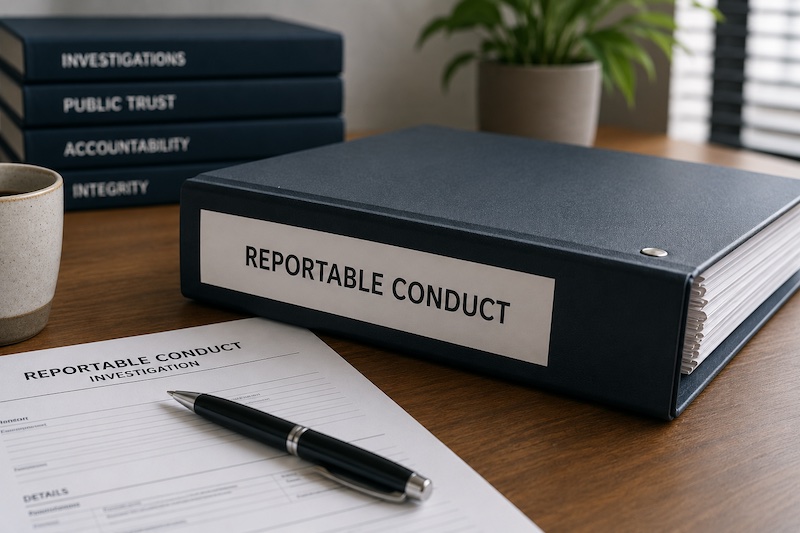
When an allegation involving a child is made, organisational leaders may be required to make difficult decisions quickly and with limited information.
They must consider child safety, evidence preservation, reporting obligations, confidentiality, employment issues, procedural fairness and organisational governance.
Regional Queensland Investigations created this Resource Centre to help Queensland organisations understand the Reportable Conduct Scheme and respond to allegations professionally, fairly and confidently.
Reportable Conduct matters should be managed through a structured, evidence-based and child-focused process.
Queensland’s Reportable Conduct Scheme establishes a framework for certain organisations to identify, report, investigate and respond to allegations concerning the conduct of workers towards children.
The Scheme is intended to strengthen child safety, increase organisational accountability and provide independent oversight of how relevant allegations are handled.
It is not simply a reporting process. It also requires organisations to examine whether their systems, policies, supervision and governance arrangements adequately protect children.
These resources are designed for Queensland organisations and decision-makers responsible for child safety, governance, workforce management and investigative responses.
Guidance for state and non-state schools, education providers, principals, governing bodies and school leadership teams.
Resources for childcare centres, early learning providers, outside school hours care services and organisational leaders.
Support for organisations delivering disability, support, accommodation or community services to children and young people.
Guidance for sporting clubs, associations, governing bodies, coaches, committees and child safety officers.
Resources for religious institutions, charities, not-for-profits, youth groups and community organisations.
Investigation and governance guidance for public authorities, departments, statutory entities and funded service providers.
The decisions made during the first hours and days following an allegation can affect child safety, evidence integrity and the fairness of the entire investigative process.
Consider immediate safety risks and whether interim protective measures are required.
Secure relevant records, messages, CCTV, access data, incident reports and other material before it is lost.
Assess whether the matter should be notified to police, child safety authorities, regulators or other oversight bodies.
Limit unnecessary disclosure and protect children, witnesses and the integrity of the investigation.
Poorly planned questioning can contaminate evidence, affect memory and undermine later interviews.
Early advice can assist the organisation to identify the correct investigative and governance pathway.
Learn how Regional Queensland Investigations assists organisations with preliminary assessments, independent investigations, evidence preservation, witness interviews, procedural fairness and final investigation reports.
This 12-part series provides detailed guidance covering the key issues organisations should understand when responding to Reportable Conduct allegations.
RQI will release one new article in this 12-part Reportable Conduct series every Friday at 7:00 am throughout July, August, September and October.
Every Friday at 7:00 amUnderstand the purpose of the Scheme, the organisations it applies to and the responsibilities it creates.
Read ArticleLearn the immediate steps organisations should take to protect children, preserve evidence and manage risk.
Read ArticleExamine how independence strengthens credibility, reduces conflicts and supports defensible organisational decisions.
Read ArticleUnderstand why natural justice is essential to a fair, reliable and defensible Reportable Conduct investigation.
Read ArticleIdentify the common procedural and evidentiary errors that can undermine investigations and expose organisations to risk.
Read ArticleLearn how to identify and preserve documentary, digital, physical and witness evidence from the outset.
Read ArticleExplore the planning, questioning, support and evidentiary issues involved in interviewing children and vulnerable witnesses.
Read ArticleConsider when an internal response may be appropriate and when an independent investigator should be appointed.
Read ArticleLearn what decision-makers should expect from a clear, comprehensive and evidence-based investigation report.
Read ArticleExamine the leadership, governance and accountability responsibilities applying to the Head of Entity.
Read ArticleLearn how preliminary assessments can identify the appropriate, proportionate and defensible response to an allegation.
Read ArticleDiscover why organisations engage RQI for independent, professional and procedurally fair Reportable Conduct investigations.
Read ArticleReportable Conduct allegations can involve serious accusations, competing accounts, power imbalances, child safety concerns and significant consequences for everyone involved.
An independent investigator can help an organisation:
Every matter is different. RQI tailors the investigation to the allegation, the evidence, the relevant organisation and the needs of the authorised decision-maker.
Review the allegation, available information, immediate risk, jurisdiction and potential notification obligations.
Identify allegations, witnesses, evidence, interview sequencing, procedural fairness requirements and limitations.
Identify and secure documents, digital material, CCTV, messages, records and other available evidence.
Conduct carefully planned interviews with relevant witnesses, complainants, respondents and other persons.
Provide relevant parties with a fair opportunity to respond to allegations and adverse material.
Analyse the evidence and provide clear findings, reasons and recommendations where requested.
RQI provides independent investigative assistance throughout metropolitan, regional, rural and remote Queensland.
Initial assessment of allegations, risks, available evidence and the most appropriate investigative response.
End-to-end investigation of Reportable Conduct and related child-safety allegations.
Development of investigation scope, allegations, methodology, interview strategy and evidence requirements.
Professional interviews with complainants, respondents, witnesses, children and vulnerable persons where appropriate.
Clear and properly documented processes for allegations, responses and consideration of adverse material.
Comprehensive reports setting out evidence, analysis, findings, reasons and organisational issues.
RQI investigators undertaking relevant child-related investigations hold current Queensland Blue Cards under Queensland’s Working with Children Check framework.
A Blue Card is one part of working safely and professionally with children. It should be supported by appropriate investigative experience, careful interview planning, sound evidence-handling practices and a strong understanding of procedural fairness.
A Reportable Conduct investigation should not be viewed only as a process for determining whether a particular allegation is substantiated.
It may also identify wider organisational issues requiring attention.
Determine whether policies clearly identify risks, responsibilities and reporting pathways.
Consider whether workers received appropriate oversight, direction and support.
Examine whether children, families and workers can raise concerns safely and effectively.
Identify cultural issues that may discourage reporting or minimise child-safety concerns.
Assess whether staff understand boundaries, child safety, reporting requirements and expected conduct.
Consider what changes are required to reduce the likelihood of similar incidents occurring again.
Not necessarily. Every allegation should be assessed, but the appropriate response will depend on the seriousness of the conduct, the available evidence, notification obligations, disputed facts and potential consequences.
An external investigator may be appropriate where the allegation is serious, involves senior staff, creates an actual or perceived conflict, requires specialist interviewing or may later be reviewed by a regulator, tribunal or court.
HR may have an important role in supporting the organisation. However, serious or sensitive allegations may require an investigator with specialist interviewing, evidence assessment, procedural fairness and report-writing skills.
Protective measures may be appropriate while the matter is investigated. Any interim action should be proportionate, documented and treated as protective rather than as a finding of wrongdoing.
Yes. Depending on the agreed scope, RQI can provide a comprehensive report addressing the allegations, methodology, evidence, procedural fairness, analysis, findings and recommendations.
Yes. RQI conducts investigations throughout metropolitan, regional, rural and remote Queensland.
Reportable Conduct matters may overlap with workplace misconduct, governance, fraud, serious misconduct and other organisational issues.
If your organisation has received an allegation involving a child, RQI can assist with preliminary assessment, investigation planning, evidence preservation, witness interviews, procedural fairness and comprehensive investigation reporting.
We provide on-the-ground investigations throughout regional, rural and remote Queensland.
You can send initial details through our Contact Form or book a confidential consultation.
QLD Security Firm Licence No: 4769679 | NT Inquiry Agency Licence No: LIA1213