
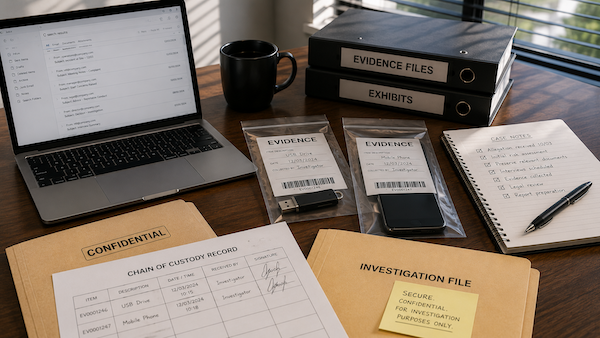
Internal HR or Independent Investigator? Choosing the Right Approach for a Reportable Conduct Investigation
When a serious allegation involving a child is received, one of the first decisions an organisation must make is who should conduct the investigation.
In many organisations, the initial assumption is that the matter can be handled by Human Resources, a senior manager or another internal employee.
That may be appropriate in some circumstances. However, Reportable Conduct investigations can involve serious allegations, competing obligations, vulnerable witnesses, complex evidence and significant consequences for children, employees and the organisation.
The decision should therefore be based on the nature and risks of the matter—not simply on who is available internally.
The Role of Human Resources
Human Resources professionals play an essential role in managing workplace matters.
Depending on the organisation, HR may be responsible for:
receiving complaints;
implementing interim risk controls;
advising managers;
coordinating employee support;
maintaining employment records;
managing disciplinary processes;
ensuring organisational policies are followed; and
assisting with the implementation of investigation outcomes.
Experienced HR professionals may also conduct routine workplace investigations, particularly where allegations are relatively straightforward and there are no concerns about independence.
However, managing an employment process and conducting a complex investigation are not always the same task.
Reportable Conduct Investigations Require Specialist Skills
A Reportable Conduct investigation may require the investigator to:
assess the scope and particulars of the allegations;
identify potential child safety risks;
prepare a structured investigation plan;
preserve documentary and electronic evidence;
interview children, vulnerable witnesses and employees;
manage confidential and sensitive information;
assess conflicting accounts;
determine the reliability and weight of evidence;
provide procedural fairness;
apply the appropriate standard of proof;
make clear factual findings; and
prepare a report capable of external scrutiny.
These functions require specialist investigative experience, sound judgement and the ability to remain impartial throughout the process.
When an Internal Investigation May Be Appropriate
An internal investigator may be suitable where:
the allegation is relatively minor;
the facts are straightforward;
there are few witnesses;
the investigator has appropriate training and experience;
no actual or perceived conflict of interest exists;
the matter does not involve senior leaders;
the investigation is unlikely to attract significant external scrutiny; and
the organisation has sufficient internal resources to conduct the matter properly.
Even in these circumstances, the organisation should formally consider and document why an internal investigator is suitable.
The investigator should have sufficient authority, independence and time to conduct the investigation thoroughly.
When Independence Becomes Important
An independent investigator should be strongly considered where:
the allegations are serious or complex;
a child or vulnerable person may need to be interviewed;
sexual misconduct, physical violence, neglect or significant harm is alleged;
the allegations involve a senior executive, principal, director or board member;
the internal HR team has previously advised on the matter;
workplace relationships may affect impartiality;
there are multiple complainants or witnesses;
criminal conduct may be involved;
litigation, regulatory review or media attention is possible;
the organisation lacks suitably experienced internal investigators; or
confidence in the outcome may depend on visible independence.
The more serious the allegation and the greater the potential consequences, the stronger the case for appointing an external investigator.
Actual Bias and Perceived Bias
An internal investigator may be entirely professional and genuinely impartial.
However, the integrity of an investigation can still be affected by a perception that the investigator is too closely connected to the organisation or the people involved.
Concerns may arise where the investigator:
reports to the respondent;
has previously advised management about the complaint;
has managed earlier performance or disciplinary issues involving a party;
regularly works with key witnesses;
has expressed a view about the allegations;
participated in the events being investigated; or
may later be responsible for implementing disciplinary action.
An investigation must not only be fair. It should also inspire confidence that it has been conducted fairly.
Appointing an independent investigator can help remove concerns about internal influence, workplace politics or predetermined outcomes.
Separating the Investigator from the Decision-Maker
A sound investigation process should distinguish between the role of the investigator and the role of the organisational decision-maker.
The investigator’s role is generally to:
gather evidence;
interview relevant people;
assess the evidence;
make factual findings; and
report those findings clearly.
The organisation remains responsible for deciding what action should follow.
That may include:
child safety measures;
employment action;
disciplinary outcomes;
regulatory notifications;
policy changes;
training;
supervision improvements; or
broader organisational reform.
Separating these functions helps protect the independence of the investigation and avoids placing the investigator in the position of both establishing facts and determining punishment.
The Risks of Using an Untrained Internal Investigator
Appointing an internal employee without sufficient investigative experience may create avoidable risks.
Common problems include:
poorly framed allegations;
informal or leading interviews;
inadequate evidence preservation;
failing to test conflicting evidence;
overlooking information that may assist the respondent;
insufficient procedural fairness;
unsupported conclusions;
incomplete records; and
investigation reports that do not explain how findings were reached.
These issues may later affect disciplinary action, regulatory reporting, employment proceedings or confidence in the organisation’s response.
A flawed investigation may also need to be repeated, increasing cost, delay and distress for everyone involved.
Cost Should Not Be the Only Consideration
Internal investigations are sometimes viewed as less expensive.
However, the apparent saving may disappear if the investigation:
takes senior employees away from their usual duties;
becomes delayed because the investigator has competing responsibilities;
results in legal challenges;
must be reinvestigated;
causes loss of confidence among staff or families; or
produces findings that cannot be relied upon.
The cost of an independent investigation should be assessed against the organisational, employment, regulatory and reputational risks of getting the process wrong.
A Hybrid Approach
Some organisations use a hybrid model.
Under this approach, internal HR personnel may manage:
immediate safety measures;
employee welfare;
organisational communications;
access to records;
logistical arrangements; and
implementation of the final outcome.
An independent investigator then conducts the fact-finding process.
This allows HR to retain an important organisational role without compromising the independence of the investigation.
A hybrid model can work particularly well where the matter is sensitive, complex or likely to be reviewed externally.
Questions to Ask Before Appointing an Investigator
Before deciding who should investigate, an organisation should consider:
How serious are the allegations?
Does the matter involve a child or vulnerable person?
Could the conduct amount to a criminal offence?
Is the proposed investigator genuinely independent?
Could a reasonable person perceive bias or conflict?
Does the investigator have appropriate interview and evidence-management skills?
Has the investigator handled comparable matters previously?
Can the investigator provide procedural fairness?
Will the final report withstand external scrutiny?
Would the organisation be comfortable defending the choice of investigator to a regulator, court, board or family?
These questions help ensure the appointment decision is deliberate, defensible and proportionate to the risks involved.
Queensland Blue Card Screening
Where an investigation may involve contact with children or work within a child-related environment, organisations should also consider appropriate Working with Children Check requirements.
Regional Queensland Investigations’ investigators undertaking relevant child-related work hold current Queensland Blue Cards.
A Blue Card does not replace investigative skill, experience or appropriate child-sensitive practices. It does, however, provide clients with confidence that relevant working-with-children screening requirements have been met.
How Regional Queensland Investigations Can Assist
Regional Queensland Investigations conducts independent Reportable Conduct and child-related workplace investigations throughout Queensland.
We assist:
schools;
childcare and early learning providers;
disability service providers;
sporting clubs and associations;
religious organisations;
government agencies;
community organisations; and
not-for-profit service providers.
Our investigators can assist with:
initial allegation assessment;
investigation scoping;
terms of reference;
evidence preservation;
witness and respondent interviews;
procedural fairness processes;
analysis of documentary and electronic evidence;
factual findings;
comprehensive investigation reports; and
practical recommendations arising from identified organisational risks.
Our role is not to advocate for the complainant, the respondent or the organisation.
Our role is to establish the facts independently, fairly and professionally so that the organisation can make informed and defensible decisions.
Contact Regional Queensland Investigations
If your organisation is deciding whether a Reportable Conduct matter should be investigated internally or independently, Regional Queensland Investigations can provide confidential assistance.
Regional Queensland Investigations
Phone: 1300 870 923
Email: admin@rqinv.com.au
Website: www.rqinv.com.au

Jason King is the Director of Regional Queensland Investigations Pty Ltd. He has a background in law enforcement, compliance, workplace investigations and corporate investigations, assisting businesses and organisations across regional Queensland and the Northern Territory.