
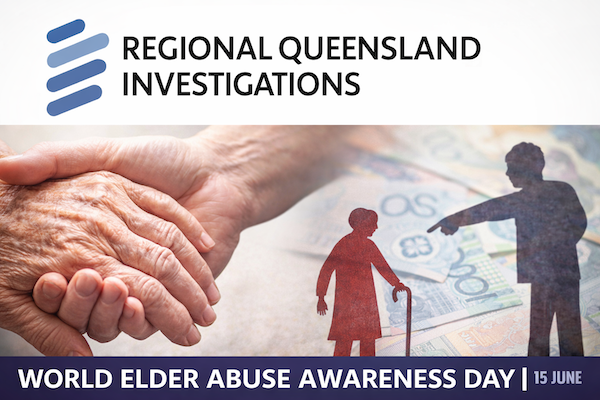
World Elder Abuse Awareness Day – Why Investigations Matter
As today is World Elder Abuse Awareness Day we must draw attention to one of the most under-reported and misunderstood forms of harm in our community: the abuse and exploitation of older people.
In Queensland, elder abuse does not always present as visible violence. More often, it occurs quietly — through financial exploitation, coercive control, neglect, misuse of authority, or systemic inaction.
For investigators, this is not an abstract issue. It is something we encounter regularly, particularly in regional and remote communities.
What Elder Abuse Really Looks Like
Elder abuse can take many forms, including:
Financial abuse by family members, carers, or trusted associates
Coercive control disguised as “help” or “support”
Social isolation and restriction of contact with family or friends
Neglect in care arrangements or supported accommodation
Pressure to sign documents without proper understanding or consent
In many cases, the victim is dependent on the very person causing the harm — making disclosure difficult and fear of consequences very real.
Why Elder Abuse Is Often Missed
There are several recurring reasons elder abuse goes unaddressed:1. Assumptions About Capacity
Older people may be wrongly assumed to be “confused,” “difficult,” or unreliable witnesses, rather than individuals experiencing genuine harm.
Loss of confidence in a person’s capacity can result in their concerns being dismissed instead of properly assessed.
2. Over-Reliance on Informal Arrangements
Family-based or informal care arrangements are often accepted without scrutiny, even when warning signs exist.
Without independent oversight, financial and personal abuse can continue unchecked for years.
3. Fear of Escalation
Many older people fear:
Being moved into residential care
Losing contact with family
Retaliation from carers
Being labelled as a problem
This fear often leads to silence — even when harm is ongoing.
4. System Fatigue and Inaction
We regularly see situations where:
Multiple reports have been made
No clear agency takes ownership
Matters are repeatedly referred elsewhere
Responsibility is diffused
The result is prolonged exposure to harm through inaction.
The Role of Independent Investigations
Independent investigations are critical in elder abuse matters because they provide:
Objective evidence gathering, free from family or institutional pressure
Clear documentation suitable for regulators, tribunals, and courts
Assessment of capacity, consent, and coercion based on facts, not assumptions
Accountability pathways when systems fail to act internally
Investigations are not about removing autonomy — they are about protecting it.
A Regional Reality
In regional Queensland, additional challenges exist:
Limited access to specialist services
Smaller communities where power dynamics matter
Reluctance to “make trouble”
Distance from oversight bodies and tribunals
These factors make independent, external review even more important.
Why World Elder Abuse Awareness Day Matters
This day is a reminder that elder abuse is not a private family issue — it is a serious social and legal concern.
Protecting older people requires:
Listening when concerns are raised
Proper investigation, not assumptions
Respect for dignity, autonomy, and lawful process
Willingness to intervene when harm is identified
Justice should not diminish with age.
Our Position
At Regional Queensland Investigations, our role is not to decide outcomes, but to establish facts, preserve evidence, and support lawful decision-making where elder abuse is suspected.
World Elder Abuse Awareness Day reinforces the importance of vigilance, accountability, and independent oversight — particularly for those who may no longer be able to advocate for themselves.

Jason King is the Director of Regional Queensland Investigations Pty Ltd. He has a background in law enforcement, compliance, workplace investigations and corporate investigations, assisting businesses and organisations across regional Queensland and the Northern Territory.