
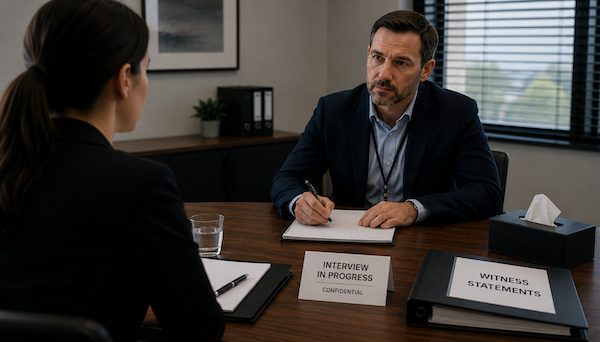
Interviewing children and vulnerable witnesses is one of the most sensitive and challenging aspects of a Reportable Conduct investigation.
Unlike a routine workplace investigation, these matters require investigators to balance the need to establish the facts with the obligation to minimise distress, protect the wellbeing of those involved and avoid compromising any related child protection or criminal investigation.
A poorly planned or improperly conducted interview can affect the reliability of the evidence, cause unnecessary distress and undermine the integrity of the investigation.
Organisations should therefore ensure that interviews involving children or vulnerable persons are approached with appropriate planning, sensitivity and investigative expertise.
Every Interview Must Have a Clear Purpose
Before interviewing a child or vulnerable witness, the investigator should carefully consider why the interview is required and what information is being sought.
Interview planning may involve consideration of:
the person’s age and developmental level;
their ability to understand and communicate;
any disability or cognitive impairment;
cultural or language considerations;
whether a support person or communication assistance is appropriate;
the most suitable interview location;
the timing and likely duration of the interview;
whether the person has already been interviewed by police or another agency; and
whether the relevant information can be obtained through other evidence.
Not every investigation requires a child to be interviewed directly. The decision should be made carefully and with proper regard to the person’s wellbeing, the seriousness of the allegation and the evidentiary value of the proposed interview.
Avoid Compromising Police or Child Protection Processes
Where an allegation may involve criminal conduct, physical abuse, sexual abuse or another serious child protection concern, organisations should proceed cautiously before arranging an internal interview with a child.
Police and specialist child protection agencies may need to conduct a formal forensic interview.
An unnecessary or poorly conducted preliminary interview can:
influence the child’s recollection;
create inconsistencies between accounts;
result in repeated questioning;
cause additional distress; or
compromise a subsequent police or forensic interview.
Before interviewing a child, organisations should consider whether the matter has been referred to police, whether specialist authorities should be consulted and whether the internal investigation should be paused or adjusted.
Creating a Safe and Supportive Environment
The interview environment can significantly influence the person’s ability to communicate clearly.
Where appropriate, interviews should take place in a private, comfortable and non-threatening setting with minimal distractions.
The investigator should explain the process in language suited to the person’s age and level of understanding.
This may include explaining:
who the investigator is;
why the interview is occurring;
what will happen during the interview;
that the person can ask for clarification;
that they should only describe what they remember;
that it is acceptable to say they do not know or cannot remember; and
that they can request a break if needed.
The investigator should not promise a particular outcome or suggest that the person is responsible for determining what action the organisation will take.
Asking Appropriate Questions
The wording and sequence of questions are critical.
Professional investigators generally begin with open-ended questions that allow the witness to describe events in their own words.
More specific questions may then be used to clarify relevant details.
Investigators should avoid:
leading or suggestive questions;
repeatedly asking the same question in a way that implies the first answer was wrong;
introducing information the witness has not raised;
expressing approval or disapproval of an answer;
pressuring the witness to remember;
making assumptions about what occurred; or
suggesting that the investigator already knows the answer.
The objective is to obtain the person’s independent recollection, not to confirm a predetermined version of events.
Supporting Vulnerable Witnesses
A vulnerable witness is not necessarily a child.
Vulnerability may arise because of:
intellectual or cognitive disability;
communication difficulties;
mental health concerns;
trauma;
limited English proficiency;
cultural considerations;
age-related impairment; or
fear of the respondent or the organisation.
The investigator may need to make reasonable adjustments, including:
allowing additional time;
using clear and uncomplicated language;
taking regular breaks;
using an interpreter or communication assistant;
allowing an appropriate support person;
changing the interview environment; or
conducting the interview in shorter stages.
Any support arrangement should assist the witness without allowing another person to influence their evidence.
The Role of a Support Person
A support person may help a child or vulnerable witness feel safe and able to participate.
However, the support person’s role should be clearly explained before the interview.
The support person should not:
answer questions on behalf of the witness;
prompt or coach the witness;
interrupt unnecessarily;
suggest what occurred; or
discuss the witness’s evidence with others.
The investigator should also consider whether the proposed support person is involved in the allegations, has relevant evidence of their own or may unintentionally influence the account.
Recording the Interview
Accurate interview records are essential.
Depending on the circumstances and applicable legal and organisational requirements, an interview may be:
audio recorded;
video recorded;
documented through a signed statement; or
recorded in detailed contemporaneous notes.
The interviewee, their parent or guardian where appropriate, and any support person should be informed of the recording arrangements.
Recordings and interview records should be securely stored and treated as confidential investigation material.
Assessing the Evidence Fairly
Evidence obtained from a child or vulnerable witness must be assessed carefully and in context.
The investigator should consider:
the person’s opportunity to observe the events;
the clarity and consistency of their account;
their age and communication abilities;
whether their account appears to have been influenced by others;
whether the evidence is supported or contradicted by other material;
the circumstances in which the disclosure was first made; and
whether there are reasonable explanations for any inconsistencies.
Minor inconsistencies do not automatically mean that a witness is unreliable. Memory, stress, age, trauma and communication difficulties may all affect how a person recounts an event.
Findings should be based on the totality of the evidence, not assumptions about how a child or vulnerable person should behave.
Maintaining Procedural Fairness
The safety and wellbeing of children must remain the primary consideration.
However, the investigation must also remain fair to the person who is the subject of the allegation.
This includes ensuring that the respondent is given sufficient information about the substance of the allegations and a genuine opportunity to respond before adverse findings are made.
Procedural fairness does not require a child to be confronted by the respondent or exposed to unnecessary questioning.
An experienced investigator can present the substance of the evidence to the respondent while continuing to protect the child’s privacy, safety and wellbeing.
Why Specialist Investigative Experience Matters
Interviewing children and vulnerable witnesses requires more than empathy.
It requires investigators who understand:
investigative planning;
child safety considerations;
evidence preservation;
appropriate questioning techniques;
trauma-informed practices;
credibility and reliability assessment;
confidentiality;
procedural fairness; and
professional investigation reporting.
The investigator must also recognise when a matter should be referred to police, child protection authorities or another specialist agency.
Queensland Blue Card Requirements
Regional Queensland Investigations recognises the importance of appropriate screening for professionals working in child-related environments.
Our investigators undertaking relevant child-related investigation work hold current Queensland Blue Cards under the Working with Children Check system.
A Blue Card does not replace specialist investigative skill, experience or appropriate interview planning. However, it provides organisations with additional confidence that investigators engaged in child-related matters have completed the required Queensland working-with-children screening process.
How Regional Queensland Investigations Can Assist
Regional Queensland Investigations conducts independent Reportable Conduct and child-related workplace investigations throughout Queensland.
Our investigators assist:
schools;
childcare and early learning providers;
disability service providers;
sporting clubs and associations;
religious organisations;
government agencies;
community organisations; and
not-for-profit service providers.
We approach interviews involving children and vulnerable witnesses with careful planning, sensitivity and respect.
Our investigators can assist organisations with:
initial allegation assessment;
investigation planning;
evidence preservation;
liaison regarding potential police or regulatory involvement;
witness and respondent interviews;
procedural fairness processes;
evidence analysis;
factual findings; and
comprehensive investigation reports.
Our investigators undertaking relevant child-related work hold current Queensland Blue Cards, providing clients with confidence that appropriate Working with Children Check requirements have been met.
Our objective is to establish the facts through an ethical, impartial and defensible investigation while protecting the dignity and wellbeing of everyone involved.
Contact Regional Queensland Investigations
If your organisation requires an independent Reportable Conduct investigation anywhere in Queensland, Regional Queensland Investigations can assist.
Regional Queensland Investigations
Phone: 1300 870 923
Email: admin@rqinv.com.au
Website: www.rqinv.com.au

Jason King is the Director of Regional Queensland Investigations Pty Ltd. He has a background in law enforcement, compliance, workplace investigations and corporate investigations, assisting businesses and organisations across regional Queensland and the Northern Territory.