
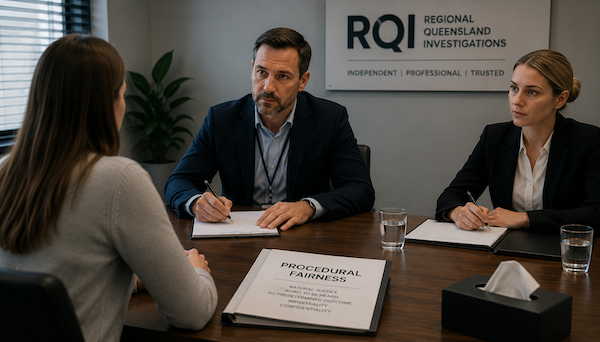
When organisations investigate allegations involving children, there is often understandable pressure to act quickly.
Protecting children is, and should always remain, the highest priority.
However, acting quickly must never come at the expense of procedural fairness.
Regardless of the seriousness of an allegation, every investigation must be conducted fairly, objectively and without predetermined conclusions. Failing to do so can expose an organisation to legal challenges, employment disputes and criticism from regulators, while also undermining confidence in the investigation itself.
Procedural fairness is not simply a legal principle—it is fundamental to conducting a professional and defensible investigation.
What Is Procedural Fairness?
Procedural fairness, sometimes referred to as natural justice, requires that decisions affecting an individual are made through a fair and impartial process.
Within a Reportable Conduct investigation, this means ensuring that:
- allegations are investigated objectively;
- findings are based solely on evidence;
- investigators remain impartial throughout the process;
- all relevant evidence is considered; and
- the person who is the subject of the allegation is given a genuine opportunity to respond.
The purpose is not to protect misconduct.
The purpose is to ensure the investigation reaches the correct conclusion based on reliable evidence.
Why Procedural Fairness Matters
A poorly conducted investigation can have significant consequences.
If procedural fairness is not observed, organisations may face:
- employment disputes;
- unfair dismissal claims;
- disciplinary decisions being overturned;
- complaints to regulators;
- reputational damage;
- increased legal costs; and
- reduced confidence from employees, volunteers and the wider community.
Even where misconduct has occurred, flawed investigative processes can undermine the outcome.
Common Mistakes Organisations Make
Despite good intentions, organisations sometimes make procedural errors that affect the integrity of an investigation.
Examples include:
- deciding the outcome before interviews have commenced;
- failing to properly explain the allegations;
- refusing the respondent an opportunity to respond;
- interviewing witnesses in a way that influences their evidence;
- failing to consider evidence that may support the respondent;
- relying on assumptions rather than facts; and
- allowing personal opinions to influence findings.
Professional investigations avoid these pitfalls through careful planning and adherence to recognised investigative principles.
Procedural Fairness Benefits Everyone
Procedural fairness is often viewed as protecting the respondent.
In reality, it protects everyone involved.
It helps ensure:
- children are safeguarded through credible investigations;
- complainants know their concerns have been properly examined;
- witnesses are treated respectfully;
- respondents receive a fair hearing;
- organisations make informed decisions; and
- governing boards have confidence in the final report.
A fair investigation ultimately produces stronger, more reliable outcomes.
Independence Supports Procedural Fairness
One of the most effective ways to strengthen procedural fairness is through the appointment of an independent investigator.
Independent investigators are able to:
- assess evidence objectively;
- avoid workplace politics;
- minimise perceived bias;
- conduct structured witness interviews;
- prepare balanced findings; and
- provide organisations with defensible investigation reports.
Independence also reassures employees, families and regulators that the investigation has been conducted fairly and professionally.
A Fair Investigation Is a Better Investigation
An investigation should never begin with the objective of proving or disproving an allegation.
Its purpose is to establish the facts.
This requires investigators to approach every matter with an open mind, gather all relevant evidence and reach findings that are supported by that evidence alone.
When organisations embrace procedural fairness, they strengthen both child protection and organisational governance.
How Regional Queensland Investigations Can Assist
Regional Queensland Investigations conducts independent Reportable Conduct investigations throughout Queensland.
Every investigation is undertaken in accordance with the principles of procedural fairness, ensuring organisations receive impartial, evidence-based findings capable of withstanding external scrutiny.
Our investigators provide:
- independent investigations;
- professional witness interviews;
- evidence assessment;
- procedural fairness throughout the investigation;
- comprehensive investigation reports; and
- practical recommendations to support sound governance.
Whether acting for schools, childcare providers, sporting organisations, government agencies or community organisations, our focus remains the same—to establish the facts professionally, fairly and objectively.
Contact Regional Queensland Investigations
If your organisation requires an independent Reportable Conduct investigation anywhere in Queensland, Regional Queensland Investigations can assist.
Regional Queensland Investigations
📞 1300 870 923

Jason King is the Director of Regional Queensland Investigations Pty Ltd. He has a background in law enforcement, compliance, workplace investigations and corporate investigations, assisting businesses and organisations across regional Queensland and the Northern Territory.