
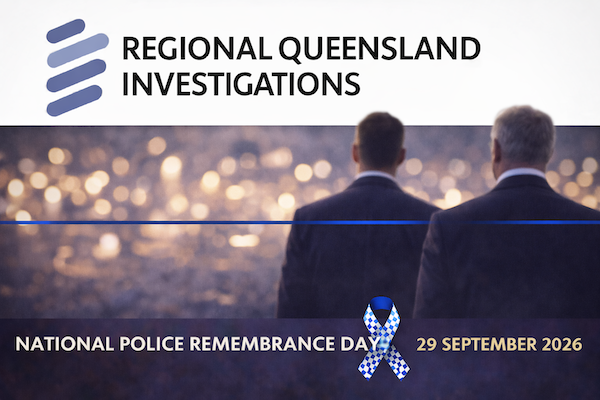
National Police Remembrance Day – Service, Sacrifice and Accountability
National Police Remembrance Day honours police officers who have lost their lives in the line of duty and recognises the ongoing risks faced by those who serve their communities every day.
It is a day of reflection — on sacrifice, service, and the responsibility that accompanies the authority entrusted to police.
Recognising Service and Sacrifice
Policing is inherently dangerous work. Officers routinely place themselves in situations involving:
violence and unpredictable risk
critical incidents and trauma exposure
high-pressure decision-making
long-term psychological strain
National Police Remembrance Day acknowledges those who have paid the ultimate price while performing their duties, and recognises the families, colleagues, and communities left to carry that loss.
That recognition matters.
A Personal Perspective
For me, National Police Remembrance Day is not abstract.
As Director of Regional Queensland Investigations, I have served as a member of both the Australian Federal Police and Victoria Police. I understand firsthand the realities of policing — the risks involved, the pressures carried, and the impact that critical incidents can have on officers, their families, and their colleagues.
I have worked alongside officers who have faced life-threatening situations, and I have seen the long-term effects of trauma and operational stress, particularly where support or review mechanisms have been insufficient.
This day is therefore very close to my heart — not only as an investigator, but as someone who has worn the uniform and understands the responsibilities that come with service.
The Weight of Authority
Police are entrusted with significant powers, including the power to:
detain and arrest
use force when necessary
restrict liberty
investigate criminal conduct
intervene during crisis situations
These powers are essential for public safety. They also carry an obligation to be exercised lawfully, proportionately, and with care, particularly when dealing with vulnerable individuals.
Honouring police service does not diminish the importance of accountability — it reinforces it.
Accountability as a Form of Respect
Effective accountability is not anti-police.
It is a cornerstone of professional policing.
Independent oversight and investigation:
protect officers from unfounded allegations
strengthen public confidence
identify systemic risks and training gaps
improve operational safety
reduce the likelihood of repeat harm
When mistakes or failures occur, transparent review and honest investigation are essential — for the integrity of policing and the trust of the community.
The Impact of Trauma on Policing
Police officers are repeatedly exposed to cumulative trauma, including:
violent incidents
fatalities and serious injury
domestic and family violence matters
high-stress confrontations
moral injury and unresolved outcomes
Without adequate support and review, this exposure can affect judgement, wellbeing, and long-term health. Recognising and addressing trauma is part of respecting those who serve.
Policing in Regional Queensland
In regional and remote Queensland, policing presents additional challenges:
limited resources
broader operational roles
closer personal relationships within communities
reduced access to specialist support
increased isolation following critical incidents
These factors place additional pressure on officers and heighten the importance of strong supervision, clear processes, and independent oversight.
When Things Go Wrong
We have been involved in matters where:
critical incidents were not properly reviewed
warning signs were missed or minimised
operational decisions lacked transparency
families were left without clear answers
Independent investigation plays a critical role in examining these moments — not to undermine policing, but to ensure lessons are learned and future harm is reduced.
Remembrance, Reflection and Responsibility
National Police Remembrance Day is not only about looking back — it is also about looking forward.
It is an opportunity to reflect on:
how police are supported
how authority is exercised
how accountability is maintained
how systems respond when things go wrong
Strong policing depends on trust, and trust is built through fairness, transparency, and responsibility.
Our Position
At Regional Queensland Investigations, we recognise and respect the service of police officers and the risks inherent in their role.
We also recognise that:
independent investigation strengthens institutions
accountability protects both officers and the public
honest review is essential to improvement
National Police Remembrance Day reminds us that service and accountability are not opposing values — they are inseparable.

Jason King is the Director of Regional Queensland Investigations Pty Ltd. He has a background in law enforcement, compliance, workplace investigations and corporate investigations, assisting businesses and organisations across regional Queensland and the Northern Territory.