
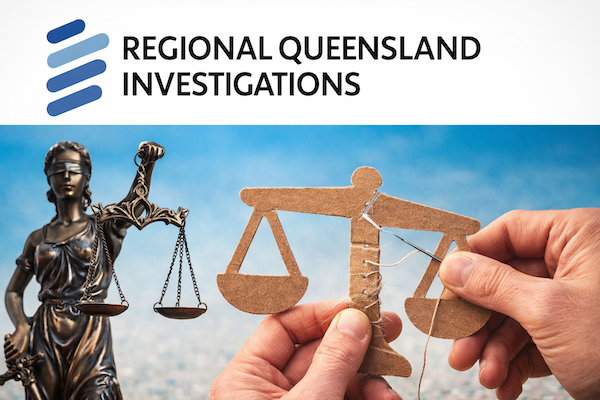
World Day of Social Justice – Why It Matters in Regional Investigations
Social justice is often discussed in abstract terms, but in investigative work — particularly in regional Queensland — it has very real, practical consequences.
At its core, social justice means that people are treated fairly by systems of authority, that vulnerable individuals are protected, and that decisions affecting a person’s liberty, safety, or rights are made lawfully and based on evidence.
In our experience, many serious investigative matters arise not because the law is unclear, but because systems fail to act, fail to listen, or fail to apply the law evenly.
What Social Justice Looks Like in Real Investigations
In practical terms, social justice in investigations means:
Allegations are properly assessed, not dismissed due to inconvenience, bias, or assumptions
Vulnerable people are protected, not blamed or ignored
Authority is exercised lawfully and proportionately, not as intimidation or control
Evidence is collected, preserved, and reviewed objectively
Oversight exists when systems fail internally
Independent investigations play a critical role when trust in a process has broken down.
Examples We Regularly Encounter
1. Vulnerable Adults Being Ignored
We frequently see matters involving adults with impaired decision-making capacity where repeated complaints are minimised or not acted upon.
Social justice in these cases means:
Recognising vulnerability as a risk factor, not a credibility issue
Ensuring complaints are escalated to appropriately skilled investigators
Preventing exploitation through inaction
Failure to act can expose individuals to ongoing harm and institutions to serious accountability risks.
2. Power Imbalances in Regional Communities
In smaller communities, power dynamics matter.
Examples include:
Local authority figures being treated differently to ordinary citizens
Complaints being discouraged because of “reputation,” seniority, or impending retirement
Victims feeling they have nowhere to turn once local pathways fail
Social justice requires that processes remain impartial, regardless of location or personal relationships.
3. Misuse or Overreach of Authority
We encounter situations where authority is used as a deterrent or threat, rather than as a lawful tool.
This can include:
Threats of arrest without clear legal grounds
Intimidating behaviour toward vulnerable individuals
Failure to properly explain rights or procedures
Accountability mechanisms exist for a reason — and independent review is often the only way misconduct is identified and addressed.
4. Families Locked Out of Information
Another recurring issue is families being excluded from decisions involving guardianship, health, or safety — even when they are the primary advocates for a vulnerable person.
Social justice here means:
Transparency in decision-making
Proper documentation and review
Ensuring families are not sidelined for convenience
Why Independent Investigations Matter
Independent investigators provide:
Objective assessment free from local bias or institutional pressure
Evidence-based reporting suitable for courts, regulators, and oversight bodies
Accountability pathways when internal systems stall or fail
This is particularly important in regional areas, where access to specialist oversight resources can be limited.
A Regional Reality
Justice should not depend on:
Postcode
Influence
Seniority
Convenience
World Day of Social Justice is a reminder that fairness, accountability, and lawful process are not optional extras — they are fundamental to public trust.
At Regional Queensland Investigations, our role is not to advocate outcomes, but to establish facts, preserve evidence, and ensure that decisions are made on truth rather than assumption.
